
Week 3: What we got right and wrong
What hit, what missed, and the Week 3 DFS lessons that actually matter heading into Week 4.
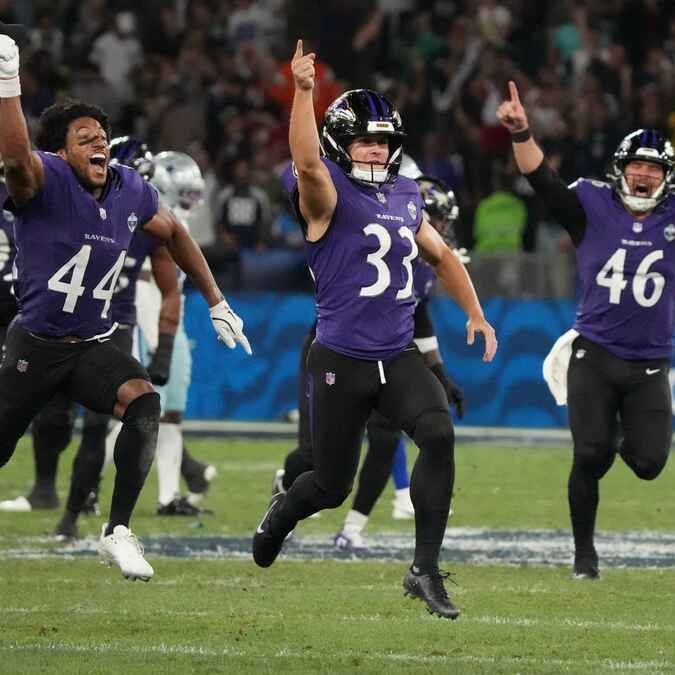
Week 3 gave us another useful round of confirmation — and another reminder that the biggest DFS edge usually comes from combining role, game environment, and current-season performance rather than leaning too heavily on matchup labels.
We had some very strong calls.
Kenneth Walker, James Cook, Jahmyr Gibbs, Derrick Henry and Jaxon Smith-Njigba all validated the core-process approach. Kansas City, Detroit, Baltimore and San Francisco were exactly the kinds of high-functioning offenses we wanted exposure to. Jets-Lions and Ravens-Cowboys both delivered the scoring environments we expected.
We also had some misses that exposed places where the process can get tighter.
Here are the eight biggest things we learned from Week 3.
1. Elite RB Usage Inside Good Offenses Is Still the Safest DFS Foundation
This was probably the clearest win of the week.
Our top running back group included:
- Kenneth Walker
- James Cook
- Jahmyr Gibbs
- Derrick Henry
They all delivered in meaningful ways.
Walker scored twice.
Cook ran for 154 yards and a touchdown.
Gibbs produced 164 yards from scrimmage and three touchdowns.
Henry handled 26 carries and scored twice.
The important point isn’t simply that they scored fantasy points.
They all shared the same profile:
- Strong offenses
- Clear lead-back roles
- High-value red-zone touches
- Enough receiving or explosive-play upside to avoid becoming one-dimensional
That’s the profile we want to keep prioritizing.
Going forward: Premium RB exposure should continue to center on role and scoring environment first, matchup second.
2. Target Concentration Remains One of the Best Predictive Signals We Have
Jaxon Smith-Njigba was our No. 1 wide receiver.
He responded with:
10 catches, 128 yards, 2 touchdowns
That wasn’t random.
The reason we liked him was the same reason we should continue prioritizing players like him going forward: Seattle’s passing offense is overwhelmingly concentrated through one receiver.
When a player owns this much of the target tree, we don’t need to perfectly predict game script.
The volume finds him anyway.
The same principle also showed up in Garrett Wilson’s 10/107/1 performance and Chris Olave’s 9/107 line.
Going forward: High target share should continue to outrank secondary matchup unless the matchup is truly prohibitive.
3. A Good Game Environment Can Support Multiple Winners
Jets-Lions finished 31-24.
Ravens-Cowboys finished 34-31.
Both were games we identified as strong DFS environments.
And both produced multiple useful fantasy plays.
Jets-Lions gave us:
- Geno Smith: 321 yards, 3 TD
- Garrett Wilson: 10/107/1
- Kenyon Sadiq: 7/105/1
- Jared Goff: 269 yards, 2 TD
- Jahmyr Gibbs: 164 total yards, 3 TD
Ravens-Cowboys gave us:
- Derrick Henry: 2 TD
- Lamar Jackson: efficient passing plus 50 rushing yards
- CeeDee Lamb: 7/112
- Dak Prescott: 276 passing yards
This is exactly why we keep starting with game environment.
When both offenses are capable of pushing, we don’t need to be perfect on every individual player.
Going forward: Keep identifying the best 1-2 potential shootouts first, then decide how to access them.
4. A Good Offensive Environment Does Not Automatically Mean a Good RB Environment
Breece Hall was one of our stronger midrange RB plays.
The reasoning made sense on the surface.
He had handled 24 and 21 touches through the first two weeks, Detroit had been vulnerable on the ground, and Jets-Lions projected as one of Sunday’s better scoring environments.
The game did produce offense.
Just not through Breece.
Hall finished with:
13 carries, 32 yards, 0 TD
Meanwhile, Geno Smith threw for 321 yards and three touchdowns.
This is a useful distinction.
We correctly identified Detroit as a defense to attack. We incorrectly assumed the Jets would exploit it primarily through their running back.
Sometimes the best way to attack a weak defense is dictated by where the weakness is, not simply by the overall quality of the matchup.
Detroit’s depleted secondary was the bigger vulnerability, and New York attacked it accordingly.
Going forward: Separate “good game environment” from “good positional matchup.” We need to identify exactly how an offense is best equipped to exploit its opponent.
5. Cheap QB Value Needs Current Production, Not Just Theoretical Rushing Upside
Kyler Murray was one of our favorite cheaper quarterbacks at $5,100.
The theory was appealing.
Tampa Bay wasn’t generating much pressure. Minnesota’s backfield was banged up. Kyler has historically offered substantial rushing upside, giving him a path to ceiling even without enormous passing volume.
But that last part was based more on reputation than current usage.
Kyler finished with:
168 passing yards, 1 TD, 1 INT
17 rushing yards
That wasn’t enough.
The mistake wasn’t identifying Tampa Bay as an attackable defense. The mistake was assuming Kyler’s theoretical dual-threat ceiling would automatically return simply because the matchup offered an opportunity.
Through the early part of this season, we haven’t consistently seen the type of designed rushing volume that once made Kyler such an attractive fantasy quarterback.
That matters.
A cheap mobile quarterback is only valuable if the mobility is actually showing up in his current role.
Going forward: Treat rushing ability and rushing usage as two different things. For DFS projections, current designed carries and scramble volume matter more than what a quarterback has historically been capable of doing.
6. Tight End Is Still the Best Place to Exploit Role Changes
We had a mixed TE week, but the underlying process remains valuable.
Kelce scored.
Juwan Johnson caught eight passes and scored twice.
Kenyon Sadiq went 7/105/1.
Brock Bowers returned and immediately posted 10/116/1.
Those are not random outcomes.
They were tied to opportunity:
- Kelce in a high-functioning offense
- Johnson in a heavy 11-personnel passing attack
- Sadiq in an expanding role
- Bowers reclaiming elite usage
The misses at tight end — notably Kincaid and Hockenson — remind us that two things still matter:
routes and target competition
A matchup can look good, but if the offense goes elsewhere, the TE floor disappears quickly.
Going forward: Tight end value should be built around route participation and target concentration first, matchup second.
7. DST Is Still the Position Where We Need the Most Discipline
Cincinnati was one of our favorite values.
Pittsburgh scored 30.
Seattle was one of our favorite premium defenses.
Washington scored 33.
Those are meaningful misses.
What went wrong?
We still leaned too heavily on the idea that struggling offenses would continue struggling.
But Pittsburgh showed real improvement:
- Aaron Rodgers threw for 292 yards and three TDs
- Jaylen Warren ran for 127 yards
Washington, meanwhile, was far more functional with Marcus Mariota than expected.
That tells us something important.
Our improved DST formula is better than “backup QB = attack,” but it still needs one more layer:
Can the opposing offense actually function with this quarterback and scheme?
Mariota is a veteran who can extend plays.
Rodgers, despite looking poor for two weeks, still has enough arm and experience to punish a defense when protection improves.
Going forward: For DST, offensive dysfunction needs to be demonstrated at multiple levels — QB, OL, scheme, and playmakers — before we call it a core target.
8. The Best DFS Plays Continue to Come From Convergence, Not One-Off Matchups
The biggest Week 3 hits shared the same structure:
Kenneth Walker:
- Elite workload
- Good offense
- Favorable opponent
- Goal-line role
James Cook:
- Lead-back volume
- High team total
- Weak defensive front
- Explosive ability
Jahmyr Gibbs:
- Receiving role
- Goal-line role
- Elite offense
- Weak opposing front
JSN:
- Massive target share
- Weak secondary
- Good quarterback play
- Competitive game environment
That is the key.
No single variable made those plays strong.
Everything lined up.
The misses generally happened when we stretched one variable too far:
- “Good game” without confirming the positional matchup
- “Mobile QB” without current rushing usage
- “Strong TE matchup” without enough guaranteed target share
- “Bad offense” without enough evidence that the dysfunction would persist
That’s the real lesson from Week 3.
The Week 4 Framework
For Week 4, the process should become even tighter:
- Current role and usage
- Offensive functionality
- Scoring environment
- Positional matchup — not just overall matchup
- OL vs. DL matchup
- Target or touch concentration
- Current rushing/receiving usage rather than historical reputation
- Previous-season data only as background
The biggest adjustment is simple:
A matchup should enhance a good role — not create one from nothing.
That’s where our best Week 3 plays came from, and that’s the approach we want to carry forward.
Get the DFS angles that matter before lock.
More Main Slate
NFL Week 4 DFS Core Plays and Values
Finding good players isn’t the hard part of DFS. Fitting the right combination under $50,000 is. Our Week 4 board has strong options
NFL Week 3 DFS Value Plays and Sleepers: Cheap Options to Unlock the Studs
Week 3 DFS values and sleepers that can open salary while still giving you real ceiling.
NFL Week 3 DFS Core Plays: Our Saturday Final Board
Week 3 is where the data starts to matter. We’ve narrowed the Sunday slate to the core plays with the best mix of proven usage, matchup edge, and salary value.