
NFL Week 4 DFS Core Plays and Values
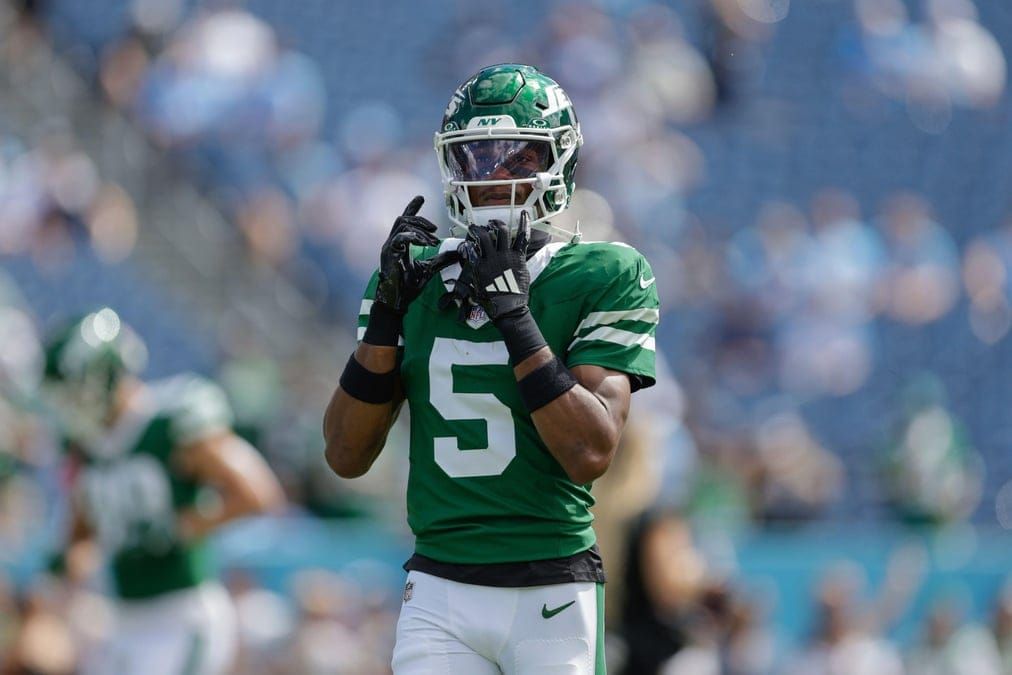
Finding good players isn’t the hard part of DFS. Fitting the right combination under $50,000 is.
Our Week 4 board has strong options at the top, but the most useful lineup-building opportunities sit in the middle. Several established players remain reasonably priced, while injuries have opened legitimate paths to more work for cheaper teammates.
The distinction matters: an expanded opportunity is worth targeting. An imagined workload is not.
We’re building around Buffalo and Seattle, prioritizing dependable receiving roles, and using selective salary relief rather than filling lineups with speculative punts. These are our favorite core plays and values for Sunday’s 1 p.m. and 4 p.m. DraftKings main slate. Salaries below come from the Week 4 player pool.
Quarterback: Pay for Allen or Save With Darnold
Josh Allen — $7,700 vs. New England
Core spend-up
Allen remains our preferred expensive quarterback.
The appeal is his ability to produce a ceiling game in more than one way. We aren’t relying exclusively on passing touchdowns, a particular receiver winning his matchup, or Buffalo needing to throw throughout the fourth quarter.
For lineup construction, the question is whether paying for that upside forces too many compromises elsewhere. This week’s affordable receivers and tight ends make the answer more manageable.
Allen is the starting point when we’re comfortable saving at two or three other positions. But he isn’t mandatory: there’s a substantial discount available at quarterback without abandoning an offense we like.
Sam Darnold — $5,500 vs. L.A. Chargers
Favorite salary-adjusted quarterback
Darnold saves $2,200 compared with Allen, which is enough to change the quality of another roster spot. Those prices are confirmed in this week’s file.
He also gives us a straightforward pairing with Jaxon Smith-Njigba. Rather than hoping a cheaper quarterback’s targets happen to land on the right receiver, we’re buying into the passing combination we’ve been prioritizing throughout this season.
The concern is familiar: Seattle doesn’t necessarily need a huge passing workload to win. That limits how aggressively we should project attempts.
Still, at $5,500, Darnold is our favorite way to save at quarterback while retaining a credible tournament ceiling.
Our approach: Allen for the premium build. Darnold when the savings materially improve the rest of the lineup.
Running Back: Established Roles First, Replacement Value Second
James Cook III — $7,400 vs. New England
Our preferred core running back
Cook is the first running back we’re considering in balanced builds.
At $7,400, he costs $800 less than Kenneth Walker III and $1,000 less than Derrick Henry. That matters on a slate where the most attractive premium receiver costs $9,100.
We’re not downgrading Walker or Henry into bad plays. We simply prefer the roster flexibility Cook provides while keeping exposure to an offense we want to invest in.
Josh Allen’s goal-line involvement is a real consideration, but it shouldn’t automatically push us away from Cook. Our takeaway from the first three weeks is that productive offenses can create enough scoring opportunities for multiple players.
Cook doesn’t need exclusive touchdown ownership to justify his salary.
Christian McCaffrey — $7,700 vs. Denver
Premium alternative at a more workable price
McCaffrey’s price puts him directly in the conversation with Cook rather than requiring another major salary jump. He is $500 cheaper than Walker and $700 cheaper than Henry.
Denver is not a matchup we’re labeling an automatic smash. The case for McCaffrey is his combination of receiving involvement, scoring opportunities and placement within San Francisco’s offense.
We’ve already seen why evaluating him solely through projected rushing yards misses the point. Receiving production and high-value touches can support his fantasy output even when the ground game is ordinary.
Cook is our preferred starting point. McCaffrey is the premium alternative we’re most interested in fitting alongside him.
Braelon Allen — $5,200 at Chicago
Injury-created value
With Breece Hall listed out, Allen becomes one of the slate’s most important workload projections. His $5,200 salary leaves room for the role to expand without demanding an enormous performance.
The key word is projection.
We should not transfer Hall’s entire workload to Allen, particularly in the passing game. Our builds need to leave room for Isaiah Davis rather than assuming every vacated carry, target and passing-down snap belongs to one replacement.
That uncertainty doesn’t eliminate the value. It simply keeps us from treating Allen like an established bell cow at a discount.
He’s a strong salary-saving option, not a player who needs to appear in every lineup.
Emanuel Wilson — $4,700 vs. L.A. Chargers
Cheaper tournament option
Jadarian Price is listed on injured reserve, opening an opportunity for Wilson at a salary below $5,000.
We prefer Wilson as the inexpensive Seattle back to investigate, but George Holani’s presence matters. The backfield distribution is not settled simply because the depth chart has changed.
Wilson fits best in lineups where the savings buy a meaningful upgrade elsewhere. He’s less attractive when we’re using him only because he is cheap.
The running-back rule this week: use Allen or Wilson to complement established production—not to replace every dependable workload in the lineup.
Wide Receiver: One Anchor, Then Targeted Salary Relief
Jaxon Smith-Njigba — $9,100 vs. L.A. Chargers
Our preferred premium receiver
JSN is now the most expensive player in the uploaded pool. That makes him a decision, not an automatic click.
Our interest hasn’t changed: we want exposure to the receiver around whom Seattle’s passing attack is built.
What has changed is the cost. At $9,100, a merely useful game is not enough to separate a tournament lineup. We need to believe the build around him preserves enough upside to justify the investment.
That is where Darnold, Addison, Wicks and the cheaper tight ends become important. They make it possible to roster JSN without reducing several other positions to desperation plays.
JSN is our favorite expensive receiver. We’re willing to pay—but not at any cost to the rest of the lineup.
Garrett Wilson — $6,800 at Chicago
Midrange core play
Wilson is the alternative when paying $9,100 at receiver creates too many compromises.
At $6,800, he saves $2,300 compared with JSN while keeping us focused on a primary receiving option rather than a secondary player who needs an unusually efficient afternoon.
That is an important distinction in our process. We would rather buy a strong role at a manageable price than force a premium name and compensate with multiple low-volume receivers.
Wilson also pairs naturally with Geno Smith in a cheaper game stack.
For balanced builds, he is one of the first receivers we’re considering.
Jordan Addison — $5,300 vs. Miami
Favorite receiver value
Jefferson is listed out, making Addison one of the clearest candidates for an increased share of Minnesota’s passing offense. At $5,300, that opportunity is affordable.
This is not simply a case of promoting the next name on the depth chart. Addison was already part of our player pool before the opportunity changed.
The caution is that losing a star receiver doesn’t automatically improve the offense. More targets available to a teammate and fewer defensive problems created by the offense can both be true.
We like Addison because his projected role and price work together—not because we expect him to inherit every missing target.
Dontayvion Wicks — $4,300 vs. L.A. Rams
Favorite cheaper receiver
Philadelphia’s current player pool lists DeVonta Smith and Dallas Goedert out. That leaves meaningful receiving opportunity available, with Wicks priced at $4,300.
Wicks is appealing because we don’t need to project him as a dominant WR1 for the salary to work.
We do need enough routes and involvement for the opportunity to turn into actual production. That remains the difference between a sensible value and blindly chasing an injury headline.
Among the lower-priced receivers, Wicks gives us one of the more credible paths to useful volume.
Our preferred receiver structure: JSN or Garrett Wilson as an anchor, then Addison or Wicks to preserve spending room elsewhere.
Tight End: A Useful Place to Save, Not a Position to Ignore
Trey McBride — $6,500 at New York Giants
Premium volume target
McBride remains our preferred expensive tight end. His salary requires a meaningful commitment, but he belongs in the same discussion as premium receivers when we’re evaluating where to spend on passing-game opportunity.
The decision is less about whether we like him and more about what we give up to fit him.
He is particularly appealing in builds that save at quarterback or running back. We’re less inclined to force him into a lineup already carrying Allen, an expensive RB and JSN.
George Kittle — $5,100 vs. Denver
Balanced-build option
Kittle sits $1,400 below McBride and gives us a more accessible way into San Francisco’s passing offense.
He also provides a natural pairing with Brock Purdy for tournament builds.
We aren’t treating Denver as a defense that automatically elevates everyone facing it. Kittle’s appeal starts with his role and offense; the salary determines how aggressively we use him.
At $5,100, he is our preferred middle ground between spending heavily at tight end and dropping into the cheapest tier.
T.J. Hockenson — $3,300 vs. Miami
Our first salary-saving tight end
Hockenson is the player we’re looking at when the lineup needs a real discount at tight end.
Jefferson’s absence creates an opportunity for Minnesota’s remaining pass catchers, and Addison is not the only possible beneficiary. Hockenson costs $3,300, leaving a much lower production hurdle than the premium options.
We’re still resisting the temptation to project a massive target increase automatically. The attraction is a plausible role improvement at a low price.
Hockenson is our preferred cheap TE. Kittle is the first upgrade. McBride is the premium investment.
Brenton Strange at $3,200 is another tournament option, particularly in Jacksonville passing stacks, but we’re treating his target floor as less certain.
Defense: Don’t Let Salary Savings Become the Entire Argument
Buffalo Bills — $3,300 vs. New England
Preferred balanced-build defense
Buffalo is our favorite compromise between matchup and salary.
At $3,300, the Bills cost $700 less than Minnesota, leaving useful flexibility without requiring a minimum-priced defense.
Our interest is in the broader matchup with New England’s offense—not a prediction that Buffalo will score a defensive touchdown.
That distinction is worth repeating after the first three weeks. We can identify situations where sacks and turnovers are more plausible. We cannot make them dependable.
Minnesota Vikings — $4,000 vs. Miami
Preferred premium defense
Minnesota remains our favorite defensive matchup when salary allows the upgrade.
The appeal is the pressure-oriented approach against the Miami offense we’ve continued to target. But $4,000 is a meaningful investment at the most volatile DFS position.
We’re willing to pay it when the rest of the lineup already works. We’re less willing to weaken a strong offensive position just to force Minnesota.
New York Jets — $2,400 at Chicago
Preferred salary-saving defense
The Jets provide the largest discount among our preferred options, facing a Chicago team with Caleb Williams listed out.
The replacement-quarterback situation puts the matchup on the radar, but it is not a guarantee of sacks or mistakes.
New York is a roster-construction choice: accept more uncertainty at defense to preserve stronger offensive plays elsewhere.
Our order by build type: Bills for balance, Vikings when paying up, Jets when the savings are necessary.
The Week 4 Build-Around Board
| Position | Core plays | Preferred values |
|---|---|---|
| QB | Josh Allen — $7,700 | Sam Darnold — $5,500 |
| RB | James Cook — $7,400; Christian McCaffrey — $7,700 | Braelon Allen — $5,200; Emanuel Wilson — $4,700 |
| WR | JSN — $9,100; Garrett Wilson — $6,800 | Jordan Addison — $5,300; Dontayvion Wicks — $4,300 |
| TE | Trey McBride — $6,500; George Kittle — $5,100 | T.J. Hockenson — $3,300; Brenton Strange — $3,200 |
| D/ST | Vikings — $4,000; Bills — $3,300 | Jets — $2,400 |
How We’re Putting It Together
There are two constructions we like most.
The premium-quarterback build starts with Allen, pairs him with a Buffalo pass catcher, and uses Addison, Wicks or Hockenson to keep the remaining positions competitive.
The discounted-quarterback build starts with Darnold and JSN, then uses the quarterback savings to preserve quality at running back. We don’t need to force another cheap player into every remaining spot simply because we started with a value QB.
In either construction, replacement backs should be used selectively. Allen and Wilson both have appealing opportunities, but loading every uncertain workload into the same lineup makes the build more fragile.
The goal is not to roster the most stars or find the most bargains, it’s to spend on the roles we trust and use values that have a credible reason to beat their price.
Injury-related recommendations reflect the availability information used for this board. Final availability and expected roles should be checked before each player’s kickoff.
Get the DFS angles that matter before lock.
More Core Plays
NFL Week 3 DFS Value Plays and Sleepers: Cheap Options to Unlock the Studs
Week 3 DFS values and sleepers that can open salary while still giving you real ceiling.

NFL Week 3 DFS Core Plays: Our Saturday Final Board
Week 3 is where the data starts to matter. We’ve narrowed the Sunday slate to the core plays with the best mix of proven usage, matchup edge, and salary value.
NFL Week 3: Applying What We Learned Through Two Weeks
Week 3 is where the edges start getting sharper. With two weeks of real usage, matchup, and injury data in hand, we’re cutting through the noise to identify the DraftKings plays with the best mix of volume, ceiling, and matchup advantage. These are the core pieces we’re building around Sunday.